
Identify what is missing
We review the VIN, photos, warning messages, wiring, connector, bracket, grille or emblem, and any related theft damage.
Stolen Radar Service
A stolen adaptive-cruise or forward-collision radar can leave the vehicle with multiple warnings and disabled safety features. AutoLab helps Bergen County drivers identify the correct replacement, setup, programming, and calibration path.
After radar theft
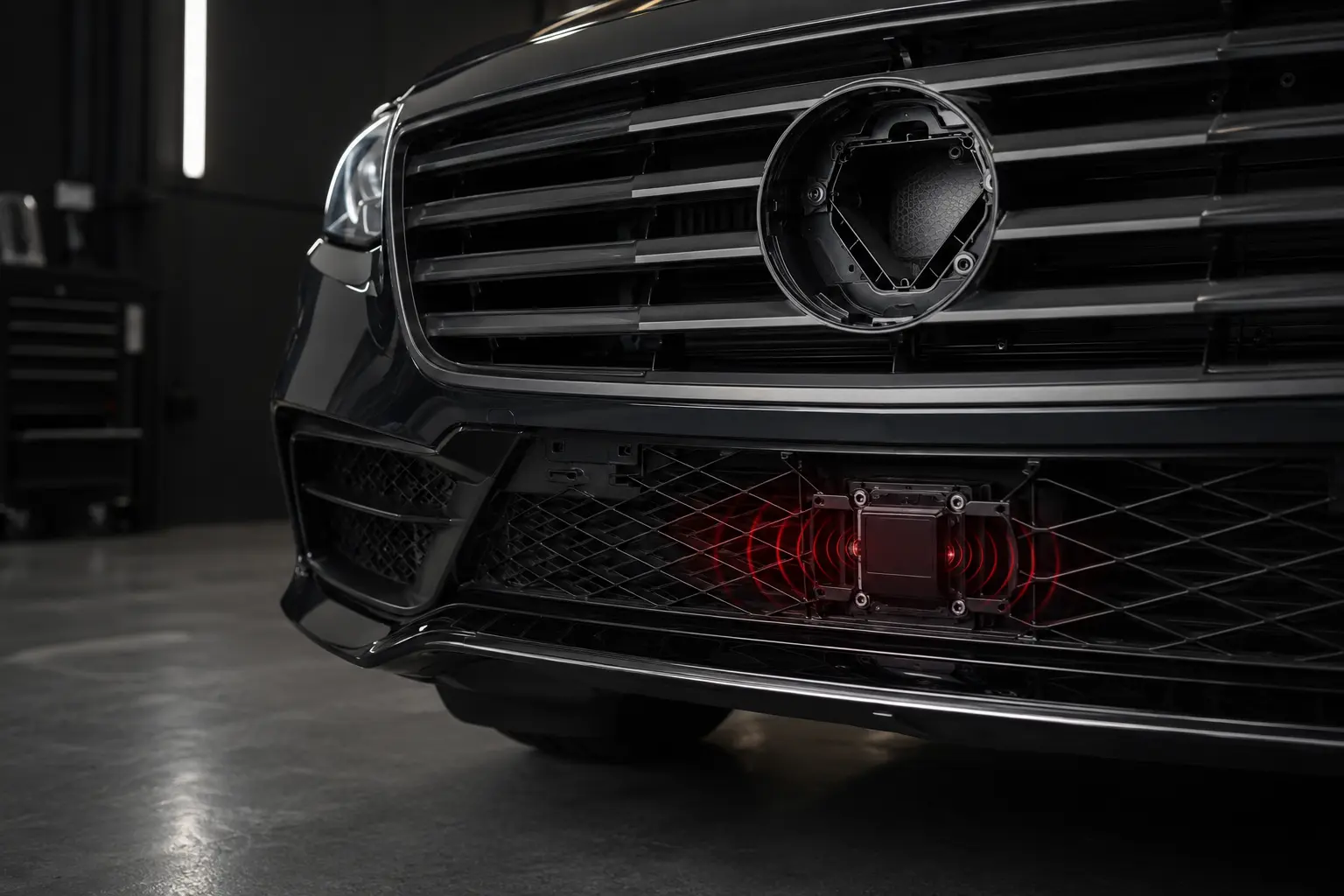
Front radar sensors are commonly mounted behind a grille, emblem, or lower bumper opening. Theft can damage the connector, wiring, bracket, trim, or mounting reference along with the sensor itself. Those conditions must be checked before a replacement radar can be programmed or calibrated correctly.
Confirm the vehicle, equipment, and missing components
Inspect mounting, connector, wiring, and related damage
Review replacement-part compatibility and setup needs
Program, initialize, calibrate, and verify as required
The repair path
The exact sequence depends on the year, make, model, replacement part, and theft damage. We review those variables before arranging the service.
We review the VIN, photos, warning messages, wiring, connector, bracket, grille or emblem, and any related theft damage.
The correct radar part number, mounting hardware, vehicle configuration, and programming requirements must be confirmed before calibration.
Once the hardware and vehicle are ready, the radar may require coding, initialization, aiming, calibration, and a final system check.
We document the outcome and explain any remaining condition that prevents adaptive cruise, collision warning, or emergency-braking systems from returning to normal.
Stolen radar questions
Often, no. Requirements vary by vehicle, but replacement radar modules can require correct coding, programming, initialization, component setup, mounting verification, and calibration.
It depends on the vehicle, donor part, software, security requirements, and whether the module can be correctly configured to the vehicle. Send the VIN and replacement-part information for review.
Include the full VIN, photos of the missing radar area and connector, dashboard warnings, scan codes if available, and the part number of any replacement sensor already purchased in the online intake.
Not when hardware, wiring, coding, programming, mounting, or component-security requirements remain unresolved. We determine the prerequisites before attempting calibration.
Start with the vehicle
Start the assessment with the VIN, dashboard warning, and clear photos of the missing sensor area. We’ll review what is damaged or missing and explain the likely next step.