
Lane-assist warning
Lane departure, lane keeping, collision warning, traffic-sign recognition, or automatic high-beam functions may show unavailable or disabled.
Windshield Camera Diagnosis
A windshield-mounted ADAS camera can disable lane assist, collision warning, traffic-sign recognition, and other safety features when it loses calibration, communication, or internal operation. AutoLab diagnoses the cause before recommending replacement.
Camera fault or calibration?
The camera behind the windshield is both a sensor and a control module. A warning can come from lost calibration, incorrect glass, a shifted bracket, obstructed vision, wiring, voltage, software setup, or internal camera failure. We use the vehicle history, scan results, and physical condition to narrow the problem before parts are replaced.
Review warnings, trouble codes, and communication status
Inspect glass, mounting, sight line, wiring, and power
Determine whether the camera can be calibrated or has failed
Set up and calibrate a replacement camera when required
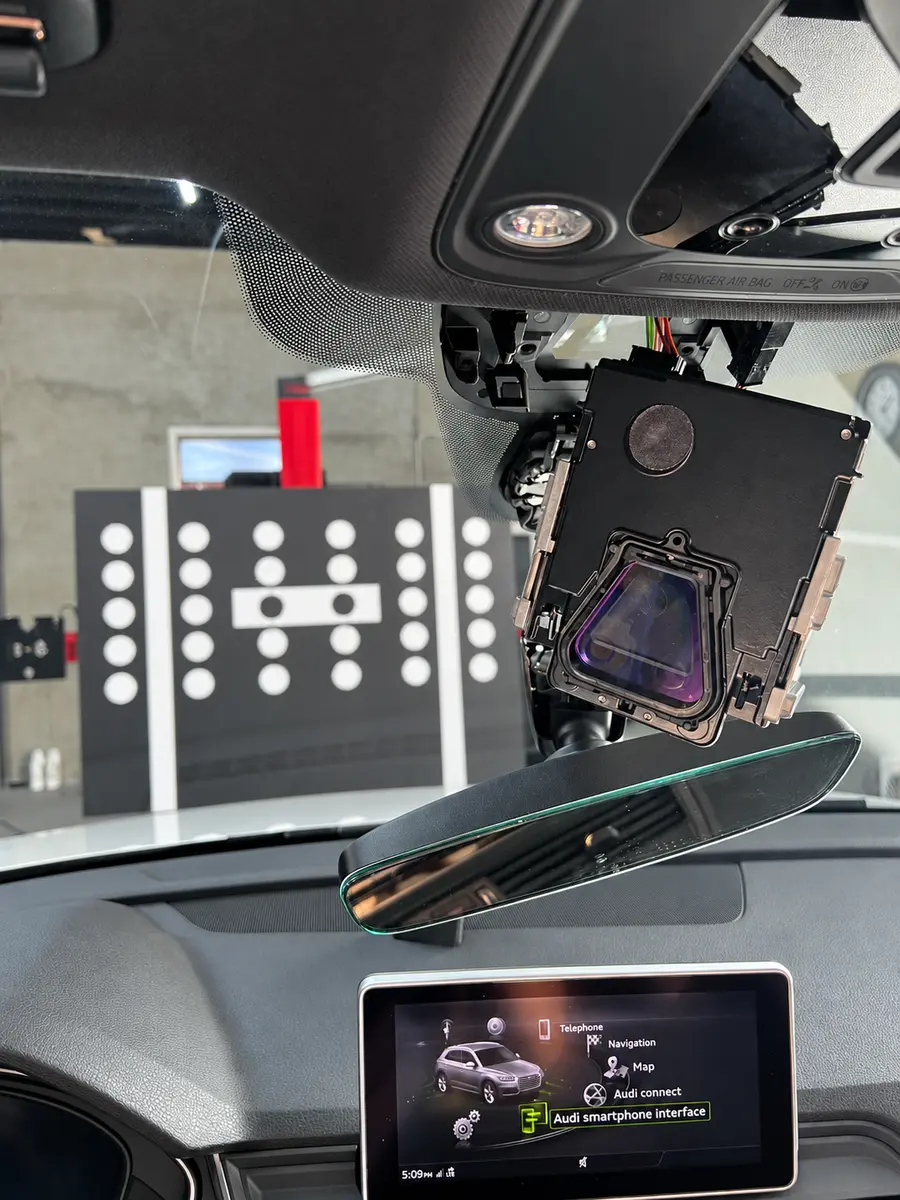
Common symptoms
One symptom is not enough to condemn the camera. We compare the vehicle's warnings, codes, recent repairs, physical condition, and calibration readiness.
Lane departure, lane keeping, collision warning, traffic-sign recognition, or automatic high-beam functions may show unavailable or disabled.
A scan may show communication, internal-control-module, temperature, voltage, coding, or calibration faults.
Some camera modules normally generate warmth, but excessive heat combined with warnings or communication failure can point to an internal or electrical problem.
Active faults, incorrect glass, blocked sight lines, damaged mounting, coding issues, or an internally failed camera can prevent a calibration procedure.
Camera-failure questions
No. The cause can be calibration, mounting, windshield type, wiring, voltage, communication, coding, another vehicle system, or an internal camera fault. Diagnosis separates those possibilities.
Yes. Cameras are electronic control modules and can develop internal, thermal, communication, or image-processing faults. The trouble codes and system behavior help determine whether replacement is justified.
Many vehicles require some combination of coding, programming, initialization, aiming, or calibration after camera replacement. The exact requirements are vehicle-specific.
Include the full VIN, a photo of every dashboard warning, any scan report, whether the windshield or camera was recently replaced, and a short description of when the problem began.
From the AutoLab workshop
Start with the vehicle
Start the assessment with the VIN, warning photos, scan report, and whether the windshield or camera was recently replaced. We’ll review the likely diagnostic path before scheduling.