
ADAS fault diagnosis
Review trouble codes, live data, system communication, calibration status, and the repair history behind the warning.
Diagnostics & Programming
A driver-assistance warning can come from incorrect coding, lost adaptations, network faults, wiring, damaged brackets, incompatible parts, or module setup—not only calibration.
A better diagnostic path
Modern vehicle faults can cross multiple modules. A code clear may hide the symptom briefly, while unnecessary calibration or parts replacement adds unnecessary expense without correcting the cause.
Review trouble codes, live data, system communication, calibration status, and the repair history behind the warning.
Identify initialization, basic-setting, learned-value, component-protection, or commissioning requirements after replacement or reset.
Determine whether a module requires configuration, software-level access, or a vehicle-specific programming path before normal operation.
Confirm system status after repair, document remaining faults, and separate resolved items from conditions needing further work.
Good information saves time
Vehicle-specific scope
We will not promise a calibration or programming result from a dashboard message alone. After reviewing the information, we explain the likely scope, variables, and next diagnostic step.
Diagnostic time, software subscriptions, security access, programming, component setup, and calibration requirements depend on the vehicle and the work involved.
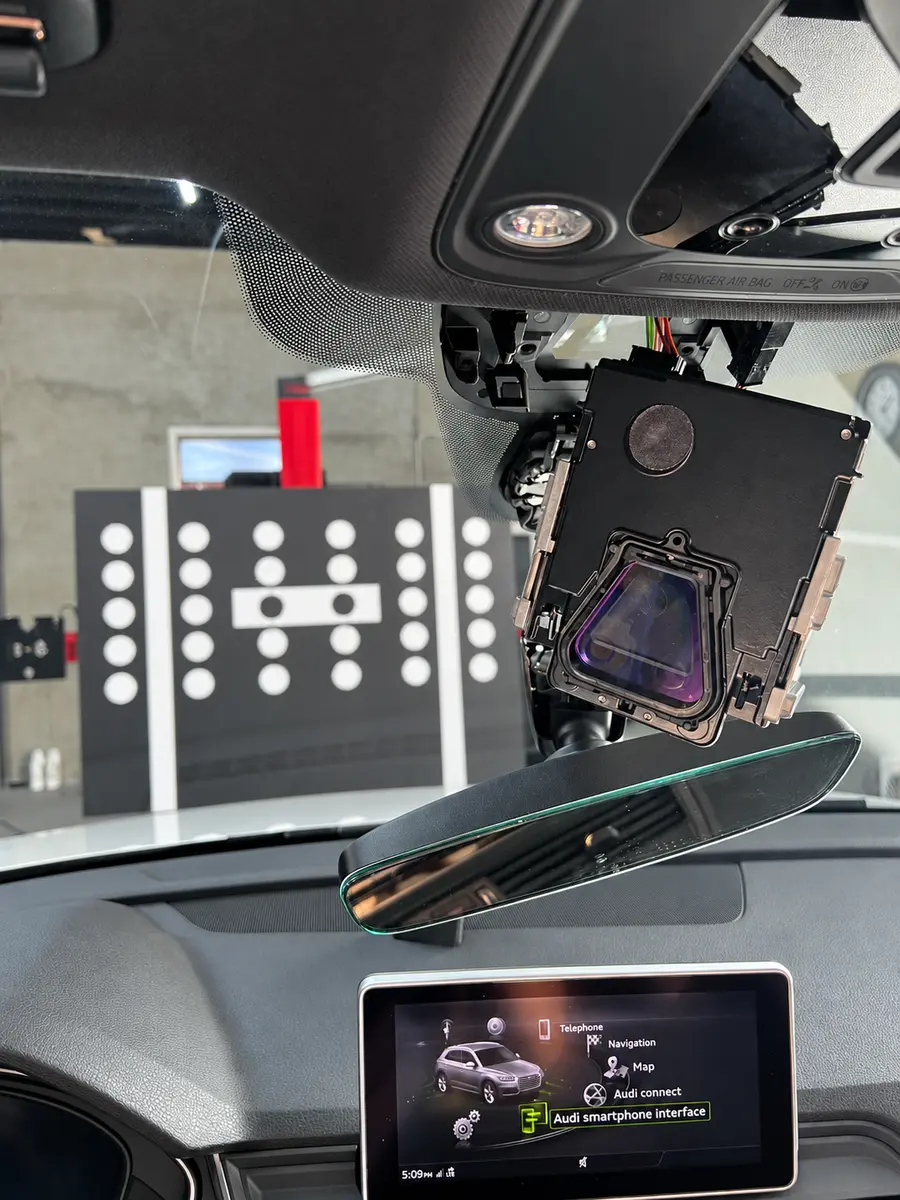
Our approach, in practice
This Audi camera was removed for inspection after the calibration target was not recognized. Inspection found bubbles in the gel optical pad. Replacing that pad resolved the recognition issue, and AutoLab successfully completed the static front-camera calibration.
AutoLab combines physical inspection with scan results and repair history to explain what needs attention and why.
Explore windshield-camera diagnosis →Start with the vehicle
Start the assessment with the VIN, warning photo, scan report, and recent repair history. We’ll review the situation before arranging the appointment.