
A real AutoLab appointment
Audi Q5 camera calibration completed after optical-pad replacement
This 2019 Audi Q5 initially failed camera calibration after aftermarket windshield installation: the camera could not recognize enough circles on the target. Further inspection found bubbles in the gel optical pad in front of the lens. AutoLab replaced the pad, resolved the target-recognition issue, and successfully completed the static front-camera calibration.
Case statusOptical pad replaced · static calibration completed
Record behind this case: Calibration failure screen, camera inspection photographs, and technician-confirmed optical-pad replacement and successful static front-camera calibration. Customer details are omitted.
Why the calibration initially failed
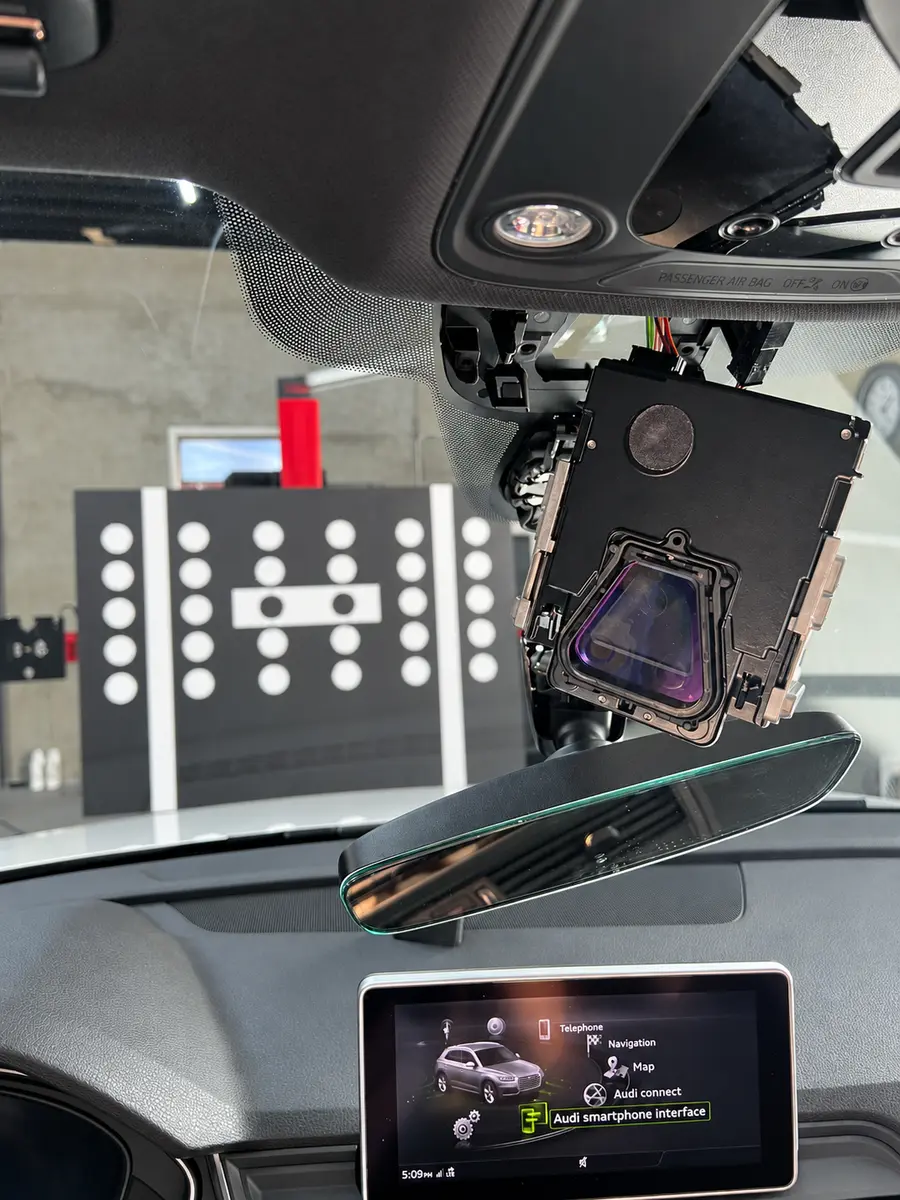
The vehicle had a persistent C1106F0 fault in its earlier diagnostic review. During the target-based procedure, the Autel tool reported: “Too few black circles recognized.” The technician observed bubbles in the tinted optical interface in front of the camera lens.
The camera was removed for a closer inspection. Visible bubbles in the gel optical pad directed the additional diagnostic work toward the camera's viewing path.
The repair and successful calibration
AutoLab replaced the camera's gel optical pad and reinstalled the camera. With the optical-interface problem corrected, the camera recognized the calibration target and the static front-camera calibration completed successfully.
The technician confirmed the completed repair. This updates the earlier version of this case, which described the diagnosis while the repair was still in progress.
What the optical pad does
The gel optical pad sits in the camera's viewing path at the windshield. Its condition matters when the camera is trying to recognize a calibration target. In this job, replacing the pad resolved the recognition problem and allowed the procedure to finish.
A failed attempt can require additional inspection before the repair is clear. The successful outcome here followed diagnosis, replacement of the affected interface, and a completed calibration.
Manufacturer guidance and glass requirements
Audi bulletin 2060826/1 covers 2018–2020 Q5/SQ5 models with the multifunction camera. It addresses calibration difficulties including C1106F0 and calls for checks of the viewing area, glass, lighting, and silicone pad. It requires a new pad whenever the camera is removed.
The bulletin also directs replacement of non-OEM windshields in its described calibration context. The completed calibration reported here is this vehicle's repair outcome; it does not establish blanket approval of aftermarket glass or replace the manufacturer's vehicle-specific requirements.
Useful information to send with a similar request
- The windshield replacement invoice and glass manufacturer or part details.
- A photograph of the dashboard warning and the exact failure message.
- Any pre-scan, post-scan, or previous calibration report.
- Whether the camera or its mounting area was disturbed during glass replacement.
Common questions
What fixed the calibration failure on this Audi Q5?
AutoLab replaced the gel optical pad in front of the windshield-camera lens. The target-recognition issue was resolved and the static front-camera calibration completed successfully.
Does this mean every aftermarket windshield will fail calibration?
No universal conclusion follows from one vehicle. This Q5 completed calibration after the optical pad was replaced. Audi's cited bulletin still specifies glass requirements for the vehicles it covers, and each job needs its own manufacturer-guidance review.
Is driving around a substitute for the failed target procedure?
No. This repair involved replacing the optical pad and successfully completing the static target-based calibration. An ordinary road test would not have established that result.
Technical references
Manufacturer guidance applies only to the vehicles and conditions it covers. The correct procedure must be confirmed for the vehicle being serviced.